
Vanilla
Indonesian vanilla beans wholesale
Arkana Source supplies whole Indonesian vanilla beans to food businesses and bulk buyers through partners in Indonesia. Send us your species, grade, length, volume, and destination on WhatsApp. We'll check what we can supply and confirm the origin and terms in your quotation.
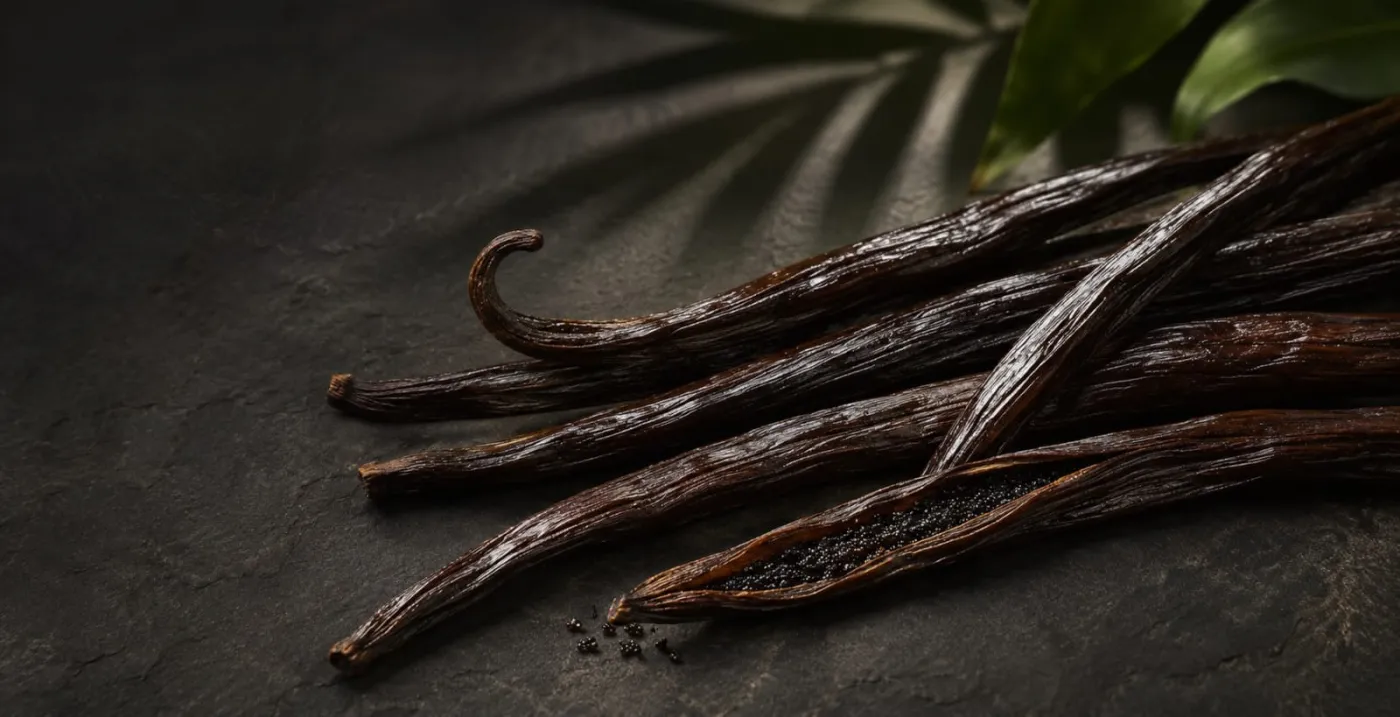
Illustrative image. Ask us for current product photos.
Grade A or Grade B vanilla beans: which do you need?
Choose by use. Grade A, or gourmet, beans are usually plump and oily with higher moisture, so they suit baking and desserts where the bean or its seeds are visible. Grade B, or extraction, beans are usually drier and may show splits, which matters less when they go into extract.
Here's the catch: neither grade has one universal definition. Sellers we reviewed in November 2026 put Grade A at around 25–35% moisture and Grade B at around 15–25%, and their ranges overlap. Those are other sellers' published figures, not Arkana Source's specification. So write your limits into the order instead of relying on the letter.
What to specify when you buy vanilla beans in bulk
| Detail | What to tell us | Why it matters |
|---|---|---|
| Species | Planifolia, tahitensis, or either | They differ in aroma and use |
| Grade and appearance | Whether split beans are acceptable | Matters for retail, less so for extraction |
| Length | Your minimum, in cm | Often affects grade and price |
| Moisture | Your acceptable range, in % | Affects weight, handling, and mold risk |
| Vanillin | Your minimum, and the test method | Published figures vary widely |
| Origin documents | What you need to support your label | Needed if you sell by origin |
| Packing and volume | Pack size and total quantity | Affects condition in transit and price |
Be careful with vanillin claims. Listings for Indonesian vanilla can differ sharply, and we've seen figures from under 0.5% to 3%. A number means little unless you know the test method and the lot it came from. ISO 5565-2 sets out a test method if you need a shared reference.
Planifolia or tahitensis?
Planifolia is the classic vanilla type and the species covered by ISO 5565-1. Tahitensis is usually described as more floral and fruity. Pick planifolia for a familiar vanilla profile, and ask for a tahitensis sample if you want a more perfumed note. Then test both in your actual recipe, because a bean that smells great in the bag can still get lost in a finished product.
Check the beans when they arrive
Open a pack. You're looking for mold, damage, and an aroma that matches your sample. Pale crystals on the surface can be natural vanillin, but white fuzz is a warning sign, so ask if you aren't sure which you're seeing.
Agree on the sample, the limits, and the packing before shipment. Then you've got something concrete to compare against. Our quality page explains how we handle requests for tests and documents.
Frequently asked questions
We source through partners in Indonesia. The exact origin is confirmed in your quotation, so tell us if you need documents to support it.
Send your required species and grade, and we'll confirm what's available in your quotation.
Yes. Ask for current photos or a sample, and we'll confirm the sample details with you.
Whole vanilla beans are usually classified under HS 0905.10. Please confirm the classification with your customs broker, as national codes can add digits.
It depends on the grade, packing, and destination, so we confirm it in your quotation. See how we export for the steps from your first message to shipment.
Ask about vanilla
Tell us your preferred species, grade, length, volume, and destination.